Could Visual Stress Be Contributing to Reading Difficulties?
September often brings a significant change in routine. Children return to school, young people begin college courses, and thousands of students prepare to start university.
Alongside these exciting new beginnings come increased academic demands. More reading, more screen time and longer periods of concentration can place greater demands on the visual system.
Students also spend more time in classrooms, libraries and lecture theatres, where bright or artificial lighting may contribute to visual discomfort for some individuals.
For some students, these changes can make symptoms that may previously have gone unnoticed become more apparent.
If reading feels unusually tiring or uncomfortable, it may be worth exploring whether Visual Stress could be contributing to the experience.
What is Visual Stress?
Visual Stress is a term used to describe visual discomfort associated with bright light, flicker and repetitive patterns, including lines of text.
Experiences vary from person to person, but some individuals report that reading and prolonged screen use feel particularly demanding.
Because these experiences are often long-standing, many people simply assume that everyone experiences text in the same way.
What signs might parents, teachers and students notice?
A student experiencing Visual Stress may report:
· Letters or words appearing blurred, distorted or crowded.
· Eye strain, headaches or migraines, particularly after reading or extended periods of screen use.
· Sensitivity to bright light, glare or artificial lighting.
· Feeling unusually tired after visually demanding tasks.
· Difficulty maintaining concentration during prolonged periods of reading.
These symptoms can also be associated with other conditions, so it's important not to make assumptions about their cause.
Why can these difficulties become more noticeable at the start of a new academic year?
Returning to education often means increased visual demands.
Students may find themselves:
· Reading for longer periods.
· Spending more time using laptops, tablets and mobile devices.
· Working under different lighting conditions, including bright or artificial lighting.
· Moving between classrooms, lecture theatres, libraries and study spaces.
· Managing a heavier academic workload.
Changes in both the learning environment and visual demands can make symptoms that may previously have gone unnoticed become more apparent.
Why don't students always recognise when there's a problem?
Many people are surprised to discover that their experience of reading differs from that of others.
An individual may not be aware of visual distortions if they have always been present, considering their experience as normal until improvements are made.
How is Visual Stress assessed?
At Vision Through Colour, we assess Visual Stress, light sensitivity and pattern sensitivity using a range of assessment tools, including the Colorimeter.
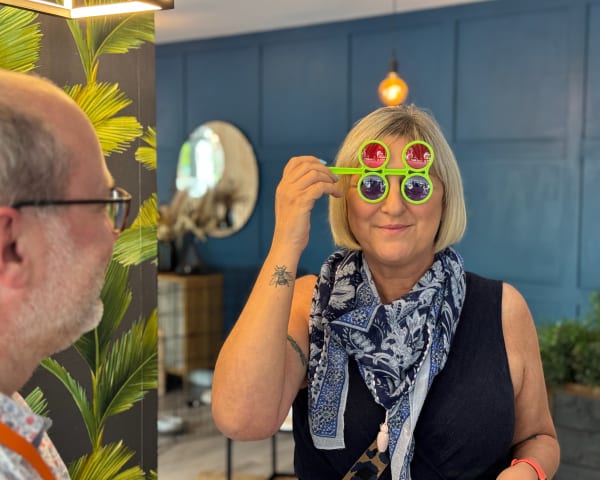
A Colorimeter is a specialist instrument used to investigate whether a bespoke, individually selected colour influences visual comfort.
Some individuals report that colour makes reading feel more comfortable or less visually demanding.
Not sure where to start?
✓ Book a free 10-minute Visual Stress Checker Chat Here
✓ Book a Visual Stress Initial Assessment Here
✓ We'll take time to understand individual experiences.
✓ We'll discuss whether Visual Stress may be contributing to any symptoms.
✓ We'll explain our findings and discuss the most appropriate next steps.
Visual Stress can be associated with several conditions, including migraine and some neurodivergent conditions. However, an assessment considers each person's experiences individually.